
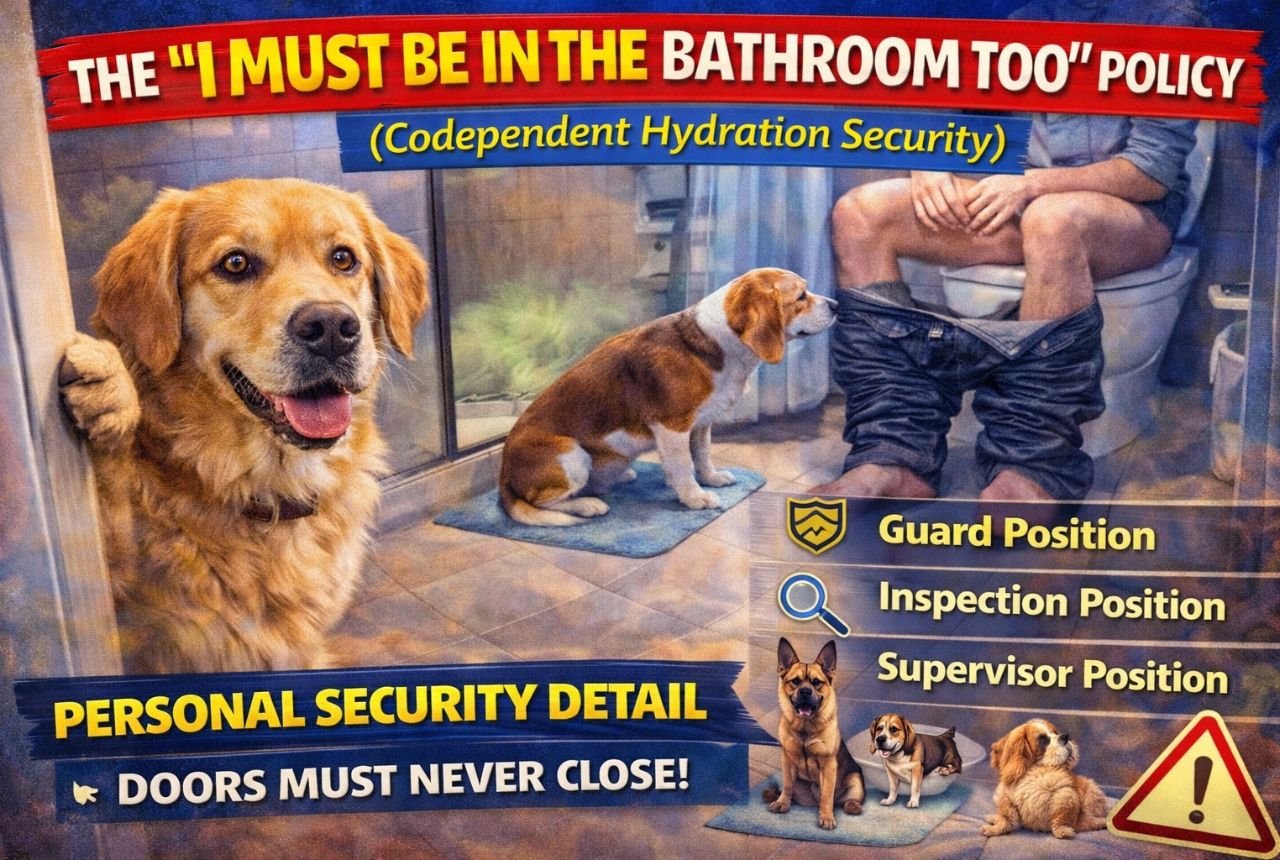
Tall Ones often attempt to enter the bathroom alone, as if privacy were a normal requirement. Dogs know better. Bathroom time is not privacy time — it is security duty and hydration audit monitoring, and it must be enforced without exception.
Phase 1 — Door Surveillance
If the bathroom door closes, activate Scramble Protocol. Scratch lightly (polite), scratch heavily (urgent), or press nose under door (tactical wedge). Whining is optional but highly effective. Tall Ones will eventually crack and open door.
Phase 2 — Proximity Control
Once inside, choose one of the following sanctioned positions:
• Guard Position: Sit facing door like a TSA agent
• Inspection Position: Sniff bathmat & shower curtain
• Supervisor Position: Stare directly at Tall One while they sit
• Sink Patrol: Sniff sink to confirm no treats are hidden
Under no circumstances should you leave. Tall Ones cannot be trusted unsupervised during vulnerable hydration elimination rituals.
Phase 3 — Emotional Regulation
Tall Ones may ask: “WHY DO YOU FOLLOW ME IN HERE?” Do not respond. They must learn. Bathroom attendance is an act of loyalty, love, and mild codependency.
Phase 4 — Post-Bathroom Debrief
When finished, escort Tall One out of bathroom slowly, to make sure no ambushes occur from hallway monsters (mail, dust, ghosts, etc.).
🐾 Breeds Who Excel at This
- Vizslas:Must accompany humans everywhere always forever
• Goldens: Fear that Tall Ones might drown in shallow water
• Huskies: Protest bathroom absence loudly and in song
• German Shepherds: Bathroom = security checkpoint
• Chihuahuas: Believe bathroom is personal throne room
🧠 Science Says:
Dogs form attachment bonds and monitor human movement as part of protective and social grouping behavior. Tall Ones call it “clingy.” We call it “pack management.”

Responses