

Reduce excessive noise by addressing the root cause. You’ll learn how to teach calm alternatives without punishment or stress.
This is one of the most important modules in the entire course because barking, whining, and attention-seeking are the behaviours owners struggle with the most — and also misunderstand the most.
This module finally gives you a clear, simple framework for reducing noise, preventing emotional overflow, and teaching calm behaviour without yelling, punishing, or worsening anxiety.
Understand the cause behind your dog’s vocal behaviour, fix the root issue, and build calm alternatives without stress or punishment.
Barking and whining are normal dog communication, but when they’re constant or inappropriate, they become stressful for both dog and owner.
The key is to identify WHY your dog is vocalising — because each type of barking requires a different solution.
This module breaks it all down.
🔵 1. The 6 Types of Barking (and What They Mean)
Almost all barking falls into one of these categories:
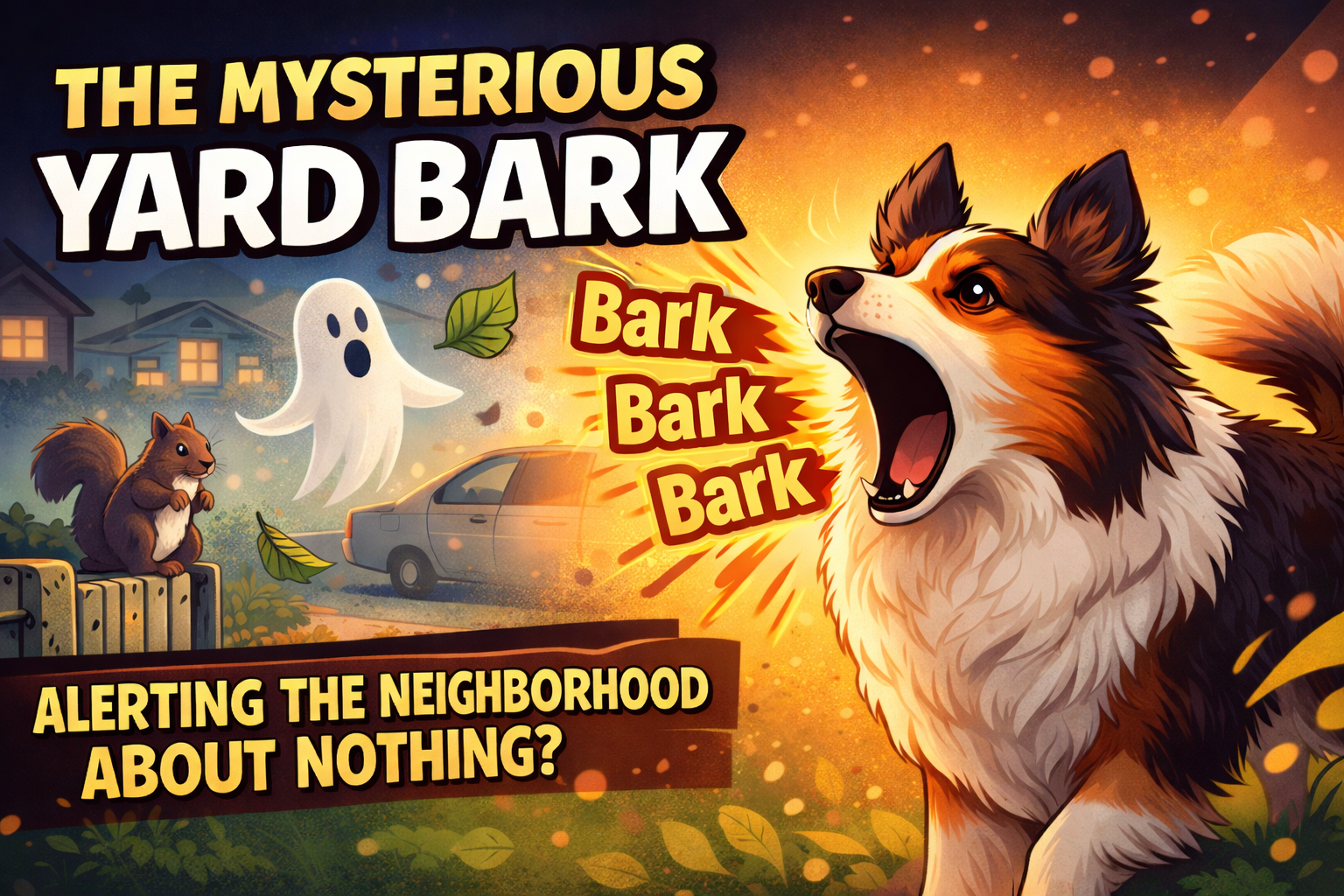
✔ 1. Alert Barking (“Something is there!”)
Triggered by:
- noises
- people walking past
- knocking
- delivery drivers
Purpose: alert the household.
Solution:
- acknowledge the alert
- reward quiet
- reduce window access
- teach calm routines
✔ 2. Excitement Barking (“I’m so excited!”)
Triggered by:
- play
- visitors
- seeing dogs
- anticipation
Purpose: emotional overflow.
Solution:
- reduce arousal
- build impulse control
- use calm rewards
✔ 3. Frustration Barking (“I want that!”)
Triggered by:
- being on leash
- blocked access
- waiting for something
Purpose: release emotional tension.
Solution:
- reward calmness
- reduce frustration triggers
- teach alternate behaviours
✔ 4. Fear/Anxiety Barking (“I’m scared!”)
Triggered by:
- strangers
- sudden noises
- new situations
- previous trauma
Purpose: increase distance or safety.
Solution:
- increase distance
- remove pressure
- counterconditioning
- calm handling
✔ 5. Attention-Seeking Barking (“Look at me!”)
Triggered by:
- boredom
- habit
- owner accidentally reinforcing it
Purpose: get attention, play, touch, food, anything.
Solution:
- stop rewarding the behaviour
- reward quiet
- add mental enrichment
✔ 6. Boredom / Under-Stimulation Barking
Triggered by:
- lack of exercise
- lack of mental work
- long periods alone
- unmet instincts
Purpose: self-entertainment.
Solution:
- enrichment
- exercise
- structured routines
🔵 2. The 4 Types of Whining (and How to Decode Them)
Whining is softer than barking but usually more emotional.
✔ 1. Excitement Whining
Dog cannot regulate emotions.
Fix:
- slow movement
- calm rewards
- impulse control exercises
✔ 2. Anxiety Whining
Dog is scared or uncertain.
Fix:
- reduce pressure
- build confidence
- desensitisation
✔ 3. Demand Whining
Dog wants something now.
Fix:
- stop responding to the whining
- reward quiet moments
- add structure
✔ 4. Frustration Whining
Dog is stuck or confused.
Fix:
- simplify training
- reduce difficulty
- use clearer cues
🔵 3. The 3 Rules of Fixing Barking & Whining
These three rules make everything easier and prevent mistakes.
✔ Rule 1: Do NOT punish vocal behaviour.
Punishment:
- increases fear
- increases anxiety
- suppresses communication
- makes behaviours worse later
Instead: guide, redirect, and reinforce calmness.
✔ Rule 2: Identify the trigger before trying to fix the behaviour.
Each trigger = different solution.
✔ Rule 3: Reward calm behaviour, not quiet by force.
A dog forced into silence is stressed.
A dog that chooses calmness is learning.
🔵 4. Step-by-Step Solutions — Based on the Type of Barking
Below are the exact professional protocols for each type of barking.
✔ A. Fixing Alert Barking
Alert barking is normal but controllable.
Step 1: Acknowledge the alert
Say:
“Thank you.”
This tells your dog you heard them.
Step 2: Move dog away from trigger
Close curtains
Create distance
Call them to another room
Step 3: Reward quiet
Dog stops barking → “Yes!” → reward
Repeat until calm.
Step 4: Teach “Quiet on cue”
- Say “Quiet”
- Reward FIRST moment of silence
- Gradually increase duration
Step 5: Manage environment
If possible, find a quiet environment with minimal distractions
✔ B. Fixing Excitement Barking
Dog is not misbehaving — they’re overstimulated.
Step 1: Reduce excitement before greeting
Module 12 routines.
Step 2: Slow everything down
Move slowly
Speak softly
Use low-value treats
Step 3: Teach calmness on cue
Mat training
Settling routines
Breathing alongside dog
Step 4: Reward calm behaviour consistently
ANY calm moment → reward.
✔ C. Fixing Frustration Barking
Often seen on walks.
Step 1: Increase distance
More space = less frustration.
Step 2: Teach alternate behaviours
Focus
Sit
Hand target
Step 3: Reduce leash tension
Tension increases frustration.
Step 4: Reward calm choices
ANY disengagement → reward.
✔ D. Fixing Fear or Anxiety Barking
Treat like an emotional problem, not disobedience.
Step 1: Increase distance immediately
Relief = learning.
Step 2: Pair scary thing with reward
Trigger appears → treat rain
Trigger disappears → stop treats
This is counterconditioning.
Step 3: Build confidence gradually
Easy exposures → tiny increments
Never flood or overwhelm.
Step 4: Reward calm curiosity
Dog looks at trigger calmly → reward.
✔ E. Fixing Attention-Seeking Barking
This is simple but requires consistency.
Step 1: IGNORE barking completely
No eye contact
No touch
No voice
No movement
Step 2: Reward FIRST moment of quiet
Quiet → “Yes!” → reward
This teaches your dog what to do instead.
Step 3: Add mental enrichment
Dogs bark more when bored.
Step 4: Increase structure
A structured day = less attention-seeking.
✔ F. Fixing Boredom Barking
Barking is self-entertainment.
Step 1: Add mental stimulation
Puzzle toys
Scent games
Training sessions
Step 2: Add physical exercise
Walks
Play
Sniffing sessions
Step 3: Give independent activities
Kongs
Chews
Enrichment
🔵 5. Teaching the “Quiet Cue” (The Right Way)
Step 1: Capture quiet
Dog stops barking → “Yes!” → treat
Step 2: Add cue
Dog is quiet → say “Quiet” → treat
Step 3: Increase duration
1 second
2 seconds
3 seconds
5 seconds
Step 4: Use cue BEFORE barking starts
Preventative cue stops barking early.
🔵 6. Solving Whining Step-by-Step
✔ 1. Excitement Whining Fix
- slow movement
- reward calmness
- stop reinforcing hyper behaviour
✔ 2. Anxiety Whining Fix
- increase distance from stressor
- build confidence
- use enrichment
- avoid pressure
✔ 3. Demand Whining Fix
- ignore whining
- reward quiet
- schedule attention, not spontaneous
✔ 4. Frustration Whining Fix
- simplify training
- reduce difficulty
- break tasks into smaller steps
🔵 7. Preventing Barking & Whining Before They Start
These are the professional-level prevention strategies.
✔ Daily Mental Enrichment
A tired brain = a quiet dog.
✔ Predictable Routine
Dogs bark less when life is structured.
✔ Clear Rules
Reduce confusion → reduce vocal behaviour.
✔ Confidence Building
Less anxiety = less barking.
✔ Physical Exercise
Not overexcitement — balanced exercise.
✔ Self-Soothing Skills
Mat training
Settle cue
Calm reinforcement
🔵 8. Practical Training Exercises (High-Impact)
Exercise A: Calmness Capture
Catch and reward calm moments all day.
Exercise B: Quiet Marker Training
Mark quiet behaviour with “Yes!”
Reward instantly.
Exercise C: Trigger Distance Game
Trigger appears → reward calmness
Move closer gradually.
Exercise D: “Do This Instead” Training
Replace barking with sit, down, or hand target.
Exercise E: Enrichment Rotation
Rotate 3–5 activities daily:
- Kong
- snuffle mat
- puzzle toy
- training session
- chew item
🔵 9. What Success Looks Like After Module 14
By the end of this module, your dog will:
✔ bark less and settle faster
✔ whine less and communicate more appropriately
✔ show calmer behaviour during triggers
✔ rely less on attention-seeking
✔ feel more confident and less anxious
✔ know what behaviours you want instead
And YOU will:
✔ understand WHY your dog vocalises
✔ know EXACTLY how to respond to each type of barking
✔ use reinforcement strategically to reduce noise
✔ avoid the mistakes that make barking worse
✔ build a calmer, quieter home environment
Responses