
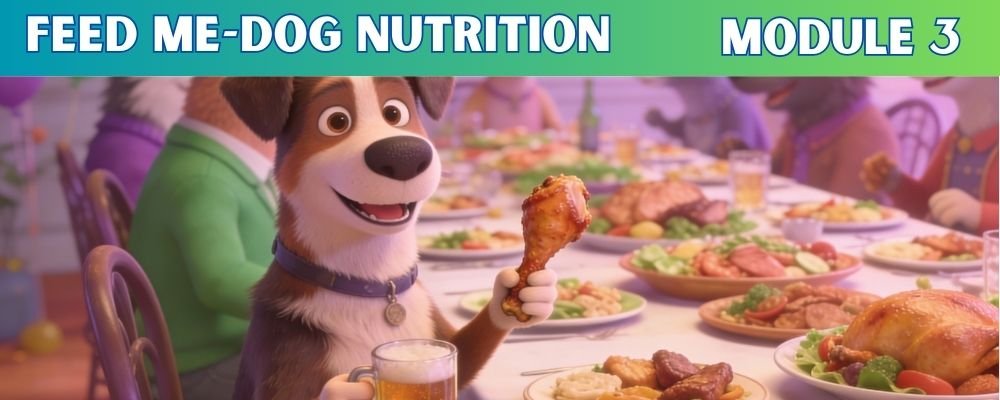
🐾 Module 3
Adult Dog Food (Welcome to Stability… Mostly)
Congratulations.
You made it.
Your dog is officially an adult.
They are now:
- Less chaotic
- Slightly wiser
- More predictable (most days)
- Still completely convinced thatyour food is better than theirs
Adulthood brings routine, reliability, and just enough self-control to survive everyday life.
Mostly.
🦴 What Changes When Your Dog Becomes an Adult
Adult dogs:
- Stop growing
- Stabilise metabolically
- Need fewer calories than teenagers
- Benefit from consistency
This is the stage where overfeeding sneaks in, because appetite doesn’t always shrink as energy needs do.
Your dog may eat with the same enthusiasm as before —
but now calories matter more.
🥣 What Adult Dogs Actually Need From Food
Adult dog food should be:
✅ Complete & Balanced
Meaning it contains:
- Proper protein levels
- Correct fats
- Essential vitamins & minerals
- Everything your dog needs without guesswork
If it isn’t labelled “complete and balanced”, it’s not a full diet.
✅ Appropriate for Your Dog
The right adult food depends on:
- Size (small vs large breeds)
- Activity level (couch enthusiast vs athlete)
- Health needs (sensitivities, joints, weight)
One-size-fits-all works poorly.
✅ Boring Enough to Do Its Job
Your dog doesn’t need fireworks at dinner.
They need:
- Nutrition
- Consistency
- Predictability
Excitement is optional.
Nutrition is not.
🕒 Feeding Schedule: When & How Often
Most adult dogs do best with:
🐕 2 Meals Per Day
Typically:
- Morning
- Evening
This helps with:
- Digestion
- Energy balance
- Training motivation
- Behaviour regulation
Yes — hangry dogs are real.
🤔 Once-a-Day Feeding?
Possible? Yes.
Ideal? Usually no.
Once-daily feeding can:
- Increase hunger-driven behaviour
- Lead to bloat risk in some breeds
- Make energy levels spiky
Two meals keeps things smoother.
🍽️ Real-World Adult Feeding Examples
🐕 Example 1: The “I’m Still Starving” Adult
Your dog finishes meals and immediately patrols the kitchen.
✔ Stick to measured portions
✔ Ignore post-meal theatrics
✔ Offer enrichment, not food
Hunger behaviour ≠ actual hunger.
🐕 Example 2: The Slightly Chubby Adult
Your dog hasn’t changed food… but gained weight anyway.
✔ Reduce portions slightly
✔ Review treats
✔ Increase activity
Adult metabolism slows. Portions must follow.
🐕 Example 3: The Active Adult
Your dog hikes, runs, trains, or works.
✔ Choose a food for active dogs
✔ Adjust portions, not frequency
✔ Monitor weight and energy
Active dogs need more fuel — but still balanced fuel.
🍖 Human Food – Friend, Foe, or Frenemy?
Human food causes more feeding mistakes than anything else.
Some is fine.
Some is dangerous.
Some will turn your dog into a digestive science experiment.
✅ Generally Safe (In Moderation)
These can be used as:
- Occasional treats
- Meal toppers
- Training rewards
Safe options include:
- Plain cooked chicken
- Carrots
- Pumpkin
- Rice
- Eggs (fully cooked)
Moderation is the key word here.
❌ Never Feed
These are strictly off the menu:
- Chocolate
- Grapes / raisins
- Onion / garlic
- Xylitol (artificial sweeteners)
- Cooked bones
No exceptions.
No “just this once.”
⚠️ A Common Adult Feeding Trap
“They’re an adult now, so a bit extra won’t hurt.”
Yes, it will.
Adult weight gain:
- Happens slowly
- Is easy to ignore
- Is hard to reverse
Feeding for health beats feeding for feelings.
🧠 Key Takeaway for Adult Dogs
Adult dogs thrive on:
- Routine
- Balanced nutrition
- Predictable feeding times
- Appropriate portions
They don’t need:
- Constant food changes
- Table scraps
- Bigger bowls
They need consistency.
Even if they tell you otherwise.
Responses